





Surrounding Area & Tourist Information
Vicinity MAP
-
![Fukui Castle Ruins [Near the Hotel] Thumbnail](https://www.hotel-fujita.jp/wp/wp-content/uploads/2024/11/7733d03d2615671ebeb9a2add23ee79d.jpg)
Ruins of Fukui Castle [Nearby the hotel
It is located just past the central park adjacent to the hotel. Fukui Castle was built by Hideyasu Yuki, the second son of Ieyasu Tokugawa and the first lord of the Fukui domain, and was a famous castle of the Echizen Matsudaira family that lasted for about 270 years. Today, the stonewalls and part of the walls remain.
During the spring cherry blossom season, the whole area is covered with cherry blossoms, turning it pink. On a morning in good season, get up early and take a leisurely walk around the moat...
Admission free
Approximately 3 minutes walk from the hotel -
![Scenic Yokokan Garden [Near the hotel] Thumbnail](https://www.hotel-fujita.jp/wp/wp-content/uploads/2024/11/90423ac4af819f2c5105a8d08577edc2.jpg)
Yoshokan Garden of Scenic Beauty [Nearby the hotel].
The Yoshokan Garden, once the villa of the Matsudaira family, is a garden with a large pond at its center and a circular path around it. Please enjoy a moment of rest and relaxation in this garden where time flows peacefully.
The American garden magazine "Sukiya Living Magazine" (The Journal of Japanese Gardening = JOJG) announced its "2011 Japanese Garden Ranking" and ranked Yohkokan Garden as the 4th best Japanese garden. Yohkokan Garden was selected as the 4th best Japanese garden.
Admission 220 yen
Opening hours: 9:00 a.m. to 7:00 p.m. (closing hours vary depending on the season)
Approximately 7 minutes walk from the hotel -
![Kitanosho Castle Ruins, Shibata Shrine [Near the Hotel] Thumbnail](https://www.hotel-fujita.jp/wp/wp-content/uploads/2024/11/35dfcf9bdba88abdaabdeaeb307ad366.jpg)
Kitanosho Castle Ruins, Shibata Shrine [near the hotel].
This is the site of the main castle of Kitanosho Castle, a fantastic castle built by Katsuie Shibata, which was attacked by Hideyoshi Toyotomi's forces only eight years after its construction. construction began in 1575, and records show that it was one of the largest castles in Japan with a nine-story castle tower, surpassing Nobunaga Oda's Azuchi Castle tenants (seven-story tower). This is the place where Ocha, Ohatsu, Oe and Oichi spent their time together. At Shibata Shrine, where Katsuie and Oichi are enshrined, a shrine has been erected with a shrine dedicated to Lord Katsuie, Oichi, and the three sisters, and is a popular spot for Katsuie and Oichi fans from all over the country to pay their respects. The museum in the park introduces the great deeds of Lord Katsuie and displays relics and historical materials.
This Shibata Shrine was selected as one of the "100 Best Historical Parks in Japan" in 2007.
Admission: Free
Museum hours: 9:00 a.m. to 6:00 p.m.
5 minutes walk from the hotel -
![Mt. Ashiba [Walking spots near the hotel] Thumbnail](https://www.hotel-fujita.jp/wp/wp-content/uploads/2024/11/e949945c049d05df7cd2e9e8e8e6810f.jpg)
Mt. Ashiba [Walking spots near the hotel] (Japanese only)
Asuwayama (Mt. Asuwa), which has not only nature but also many restaurants, shrines, museums, and art galleries. It is recommended to go to Mt. Asuwayama via Atago Hill. On the 165-meter-long staircase made of sceptered stones, you will find the Tea Ceremony Museum and the Akebonan Tachibana Memorial Literature Museum.
If you want to take a rest, go to "ASUWAYAMA DECK" (ASUWAYAMA DECK). It is also a good place to relax in a stylish cafe. If you want to enjoy dumplings, go to "Okubo-chaya" (Okubo Tea House). The restaurant also offers satisfying meals.
If you are with children, "Ashibayama Park Amusement Park" is highly recommended. You can interact with animals.
Speaking of Mt. Ashiba, be sure to stop by Ashiba Shrine. In spring, there are weeping cherry trees on the shrine grounds that are over 360 years old. Nearby, a statue of the 26th Emperor Tsugitai watches over Fukui City. The Kegoya Kuroryu Shrine is a very pleasant power spot! This shrine is considered one of Japan's four great ancient deities. There are a "Sazareishi" (a stone with a small stone on the top, which is used in the Kimigayo song) and a "Gakkakeishi" (a stone for making a wish) in the precincts of the shrine.
20-30 minutes on foot from the hotel -
![Cherry blossom trees along the Ashiba River [near the hotel] Thumbnail](https://www.hotel-fujita.jp/wp/wp-content/uploads/2024/11/8c70a4d0685631b2845c8c1114490ef3.jpg)
Cherry blossom trees along the Ashiba River [near the hotel].
On the banks of the Ashiba River, which runs through the center of Fukui City, there is a row of cherry trees that are said to be the largest in scale in Japan and have been selected as one of the "100 best cherry blossom viewing spots. In spring when the trees are in full bloom, visitors can enjoy walking through a spectacular light pink tunnel. There are approximately 600 Someiyoshino cherry trees in total, with a total length of 2.2 km, making it one of the most popular cherry blossom viewing spots in Fukui Prefecture. During the blooming period, the trees are lit up at night, making for a fantastic stroll.
Approximately 10 minutes walk from the hotel
-
Ruins of the Ichijodani Asakura Clan
The Asakura clan moved their headquarters to Ichijodani after their success in the Onin War in 1467, and the area prospered as the center of Echizen Province for five generations. However, in 1573, the Asakura clan was defeated by Oda Nobunaga in a battle to unify the country, and the entire town was burned to the ground.
Excavation of the Asakura clan site began in 1967, and in 1971 it was designated as a Special Historic Site of Japan.
The ruins have been referred to as the Pompeii of Japan, with the almost complete streets of the town excavated, including the house of the head of the family, samurai residences, temples, town houses, craftsmen's residences, and roads.
You can even try on a kosode (a ceremonial kimono), so you can dress up in the way you would have looked in those days and enjoy a time-slip experience.
Approximately 30 minutes by car from the hotel -
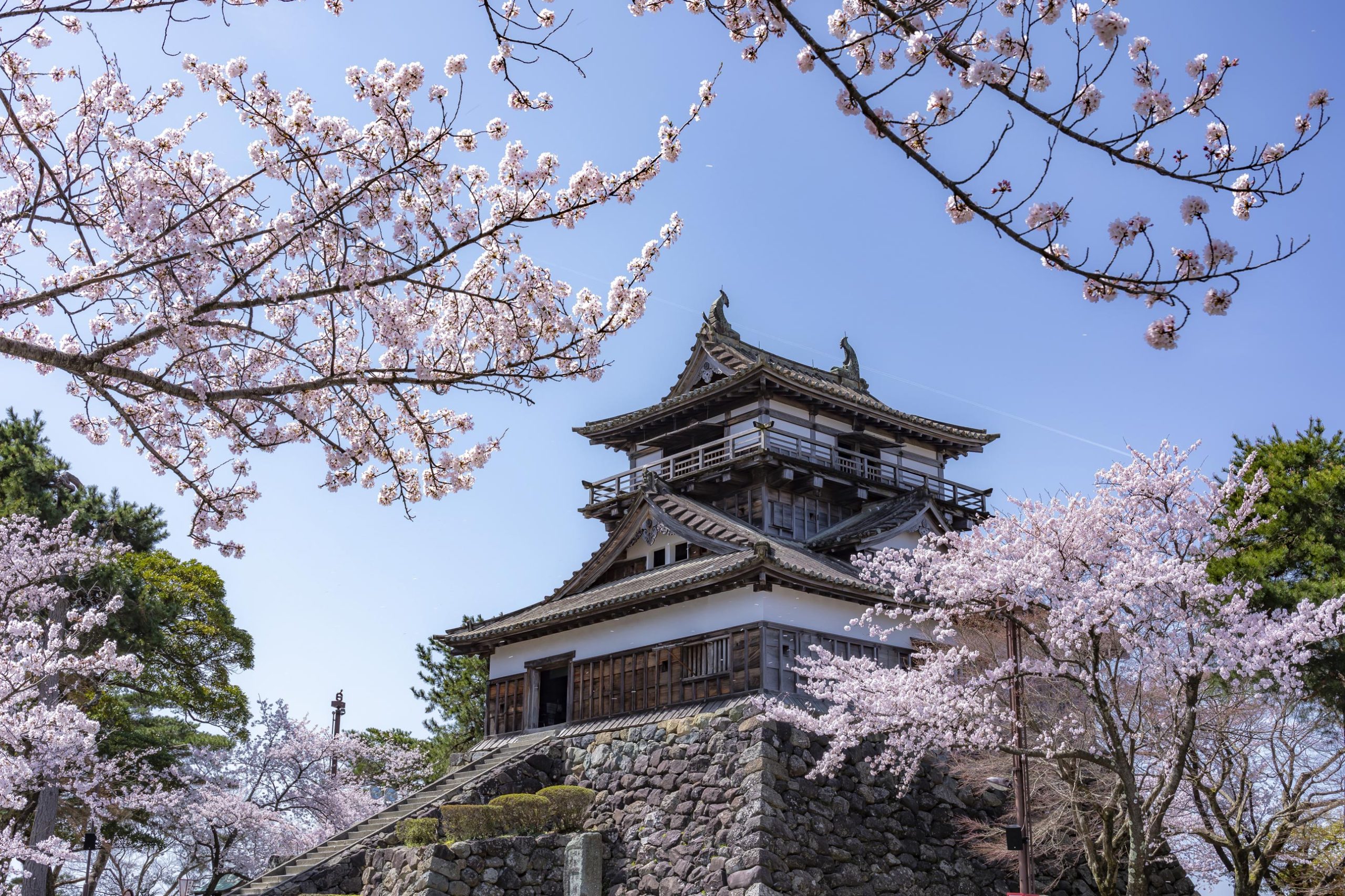
Maruoka Castle
Maruoka Castle, also known as "Kasumiga Castle," is a flat mountain castle. As its name implies, the sight of the castle floating in the midst of cherry blossoms in full bloom in spring is fantastically beautiful. Today, only the castle tower remains. During the Warring States period, Katsuie Shibata was ordered by Nobunaga Oda to build the castle as a preparation for the Ikkou Putsch, and his nephew Katsutoyo Shibata was commissioned to build it. The castle tower is a watchtower-type keep with two stories on the exterior and three stories on the interior. The stone walls are built in the old style called "nodara-zukuri," which gives the impression of being rough with many gaps, but they drain well and do not collapse even in heavy rains.
Around 400 Someiyoshino cherry trees are planted around the castle, and it is recognized as one of the 100 best cherry blossom viewing spots in Japan.
Approximately 30 minutes by car from the hotel
Or take Keifuku Bus No. 31 bound for "Honmaruoka" and get off at Maruoka Castle. -
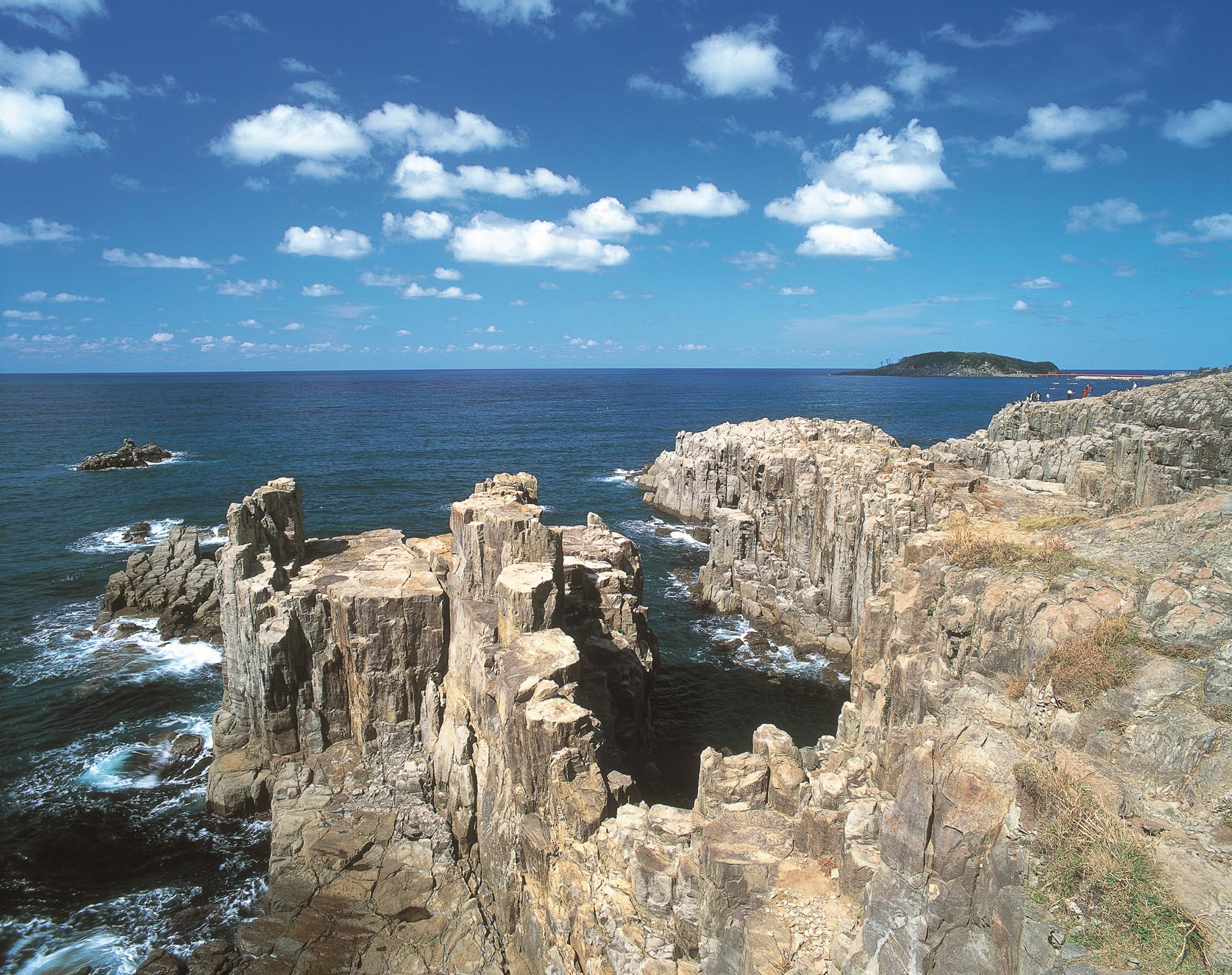
Tojinbo (name of a temple)
The highlight of the site is the rock surface, which has been cut into rough surfaces by the erosion of waves. The cliffs stretch for about 1 km, and the sight of the rough waves of the Sea of Japan crashing against the cliffs is truly dynamic. It is designated as a national natural monument. The rock is composed of columnar joints of beryllite and andesite, and only Tojinbo in Japan has such large andesite formations. Along with Mount Kumgang on the Korean Peninsula and the west coast of Norway, it is one of the three most scenic spots in the world.
A green flash is a phenomenon in which a green light is emitted for a brief moment just after the sun sets over the horizon.
This phenomenon is called "green flash," and can be seen several times a year at Tojinbo. The probability of seeing the Green Flash is very small, but there is a legend that seeing it will make you happy. It would be nice if you can see it.
It takes about one hour by car from the hotel.
Or, take the Echizen Railway from JR Fukui Station to Awara Yunomachi Station
Take the Keifuku Bus and get off at Tojinbo. -
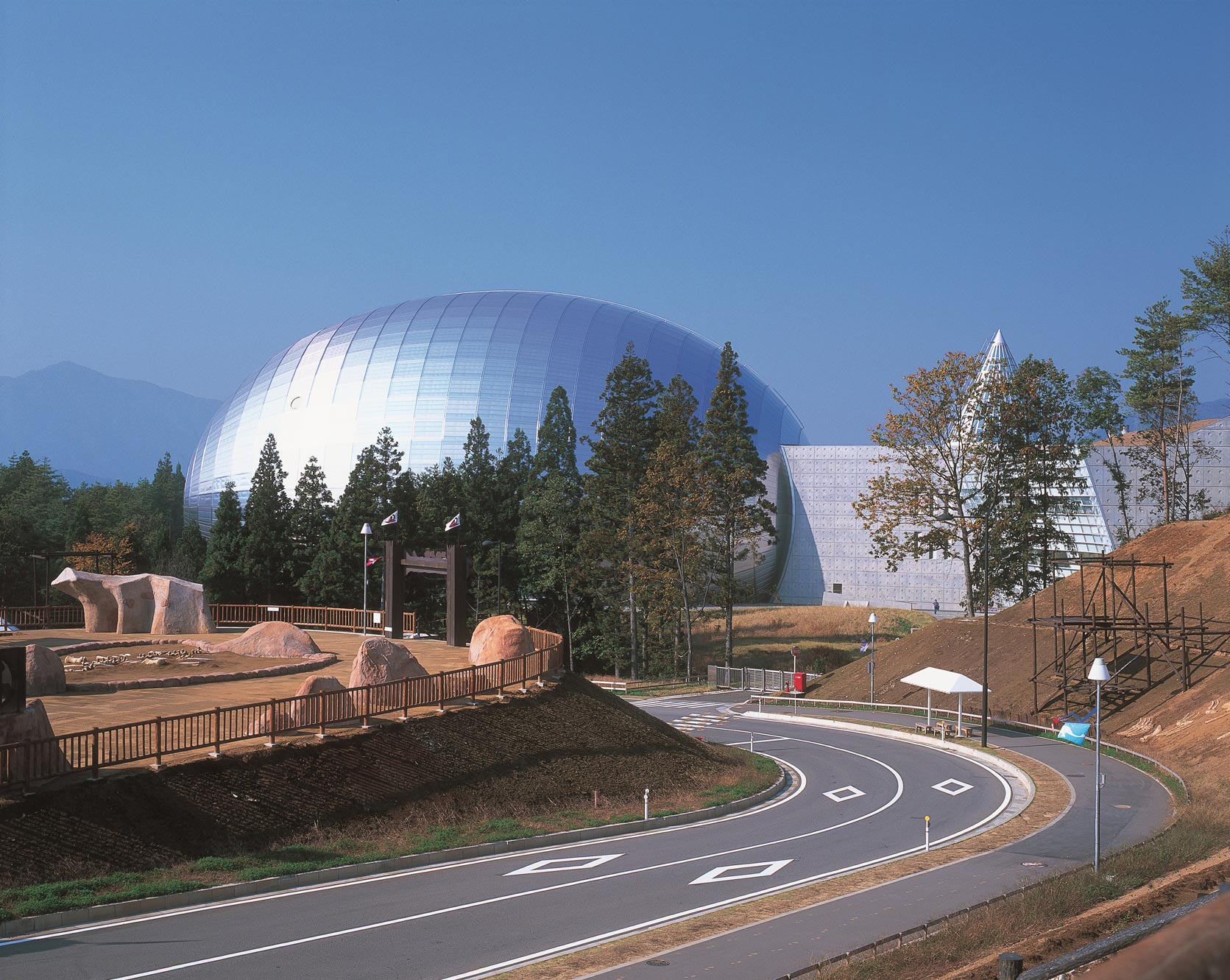
Fukui Prefectural Dinosaur Museum
It is considered one of the top three dinosaur museums in the world, along with the Royal Tyrrell Museum of Palaeontology in Canada and the Jiqian Dinosaur Museum in China. In the museum's "Dinosaur World" zone, 44 dinosaur skeletons are on display. Some of the skeletons are assembled from actual fossilized bones. You can identify them by the "Reproduction" description on the display. Dioramas and a giant screen allow visitors to get up close and personal with the powerful dinosaurs. The Fukui Dinosaur Corner is also a must-see.
In the "Science of the Earth" zone, the history of earth science, land and sea sediments, and the rocks that make up the earth are displayed in an easy-to-understand manner.
In the "History of Life" zone, visitors can learn about the 4.6 billion year long history of the earth through fossils and other exhibits.
In the "Dyno Lab," where visitors can enjoy hands-on exhibits, the whole skeleton of a T. rex can be observed from all angles, providing fun for both adults and children.
Approximately 60 minutes by car from the hotel
Or 60 minutes on the Echizen Railway Katsuyama Eiheiji Line, getting off at Katsuyama Station.
Approximately 15 minutes by community bus transfer -
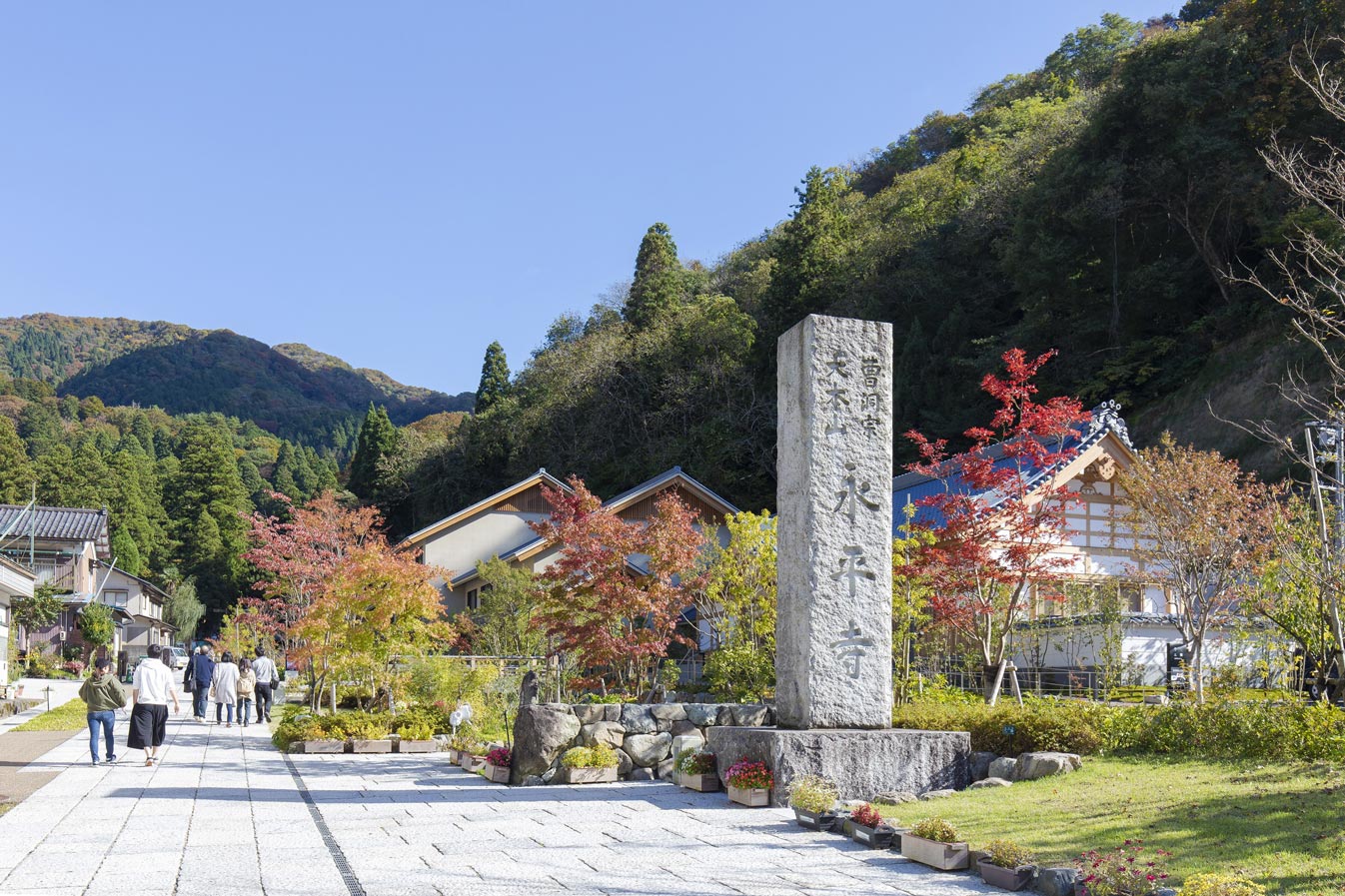
Daihonzan Eiheiji Temple
Eiheiji Temple is one of the two head temples of the Japanese Sōtō Zen School, alongside Sōji-ji Temple in Yokohama City, Kanagawa Prefecture.
Founded in the second year of the Kangen era (1244) by Zen Master Dōgen as a monastery for monastic Zen practice, the temple grounds—a secluded and serene setting rich with the sounds of streams and mountain scenery—feature over 70 buildings of various sizes, centered around the Seven Main Halls.The treasure hall, known as the Ruri Shōbōkaku, displays Important Cultural Properties—including a National Treasure written in Dōgen’s own hand—which visitors are free to view.
Furthermore, in accordance with the teaching that every aspect of a monk’s daily life is a form of spiritual practice, the temple grounds are always kept spotlessly clean. The countless stairs and corridors are so slippery that you must walk with great care.
The ceiling of Sanshōkaku features 230 paintings, and it is said that if you find a total of five of them—two carp, one squirrel, and two Chinese lions—your wish will come true. Be sure to look for them.
Hotel Fujita FukuiWe have been officially certified as a supplier to Eiheiji Temple, the head temple of the Obu sect.
About a 30-minute drive from the hotel
Or, take the Echizen Railway Katsuyama-Eiheiji Line for 25 minutes and get off at Eiheiji-guchi Station,
Transfer to the Keifuku Bus, ride for 13 minutes, get off at the last stop, and walk 5 minutes -
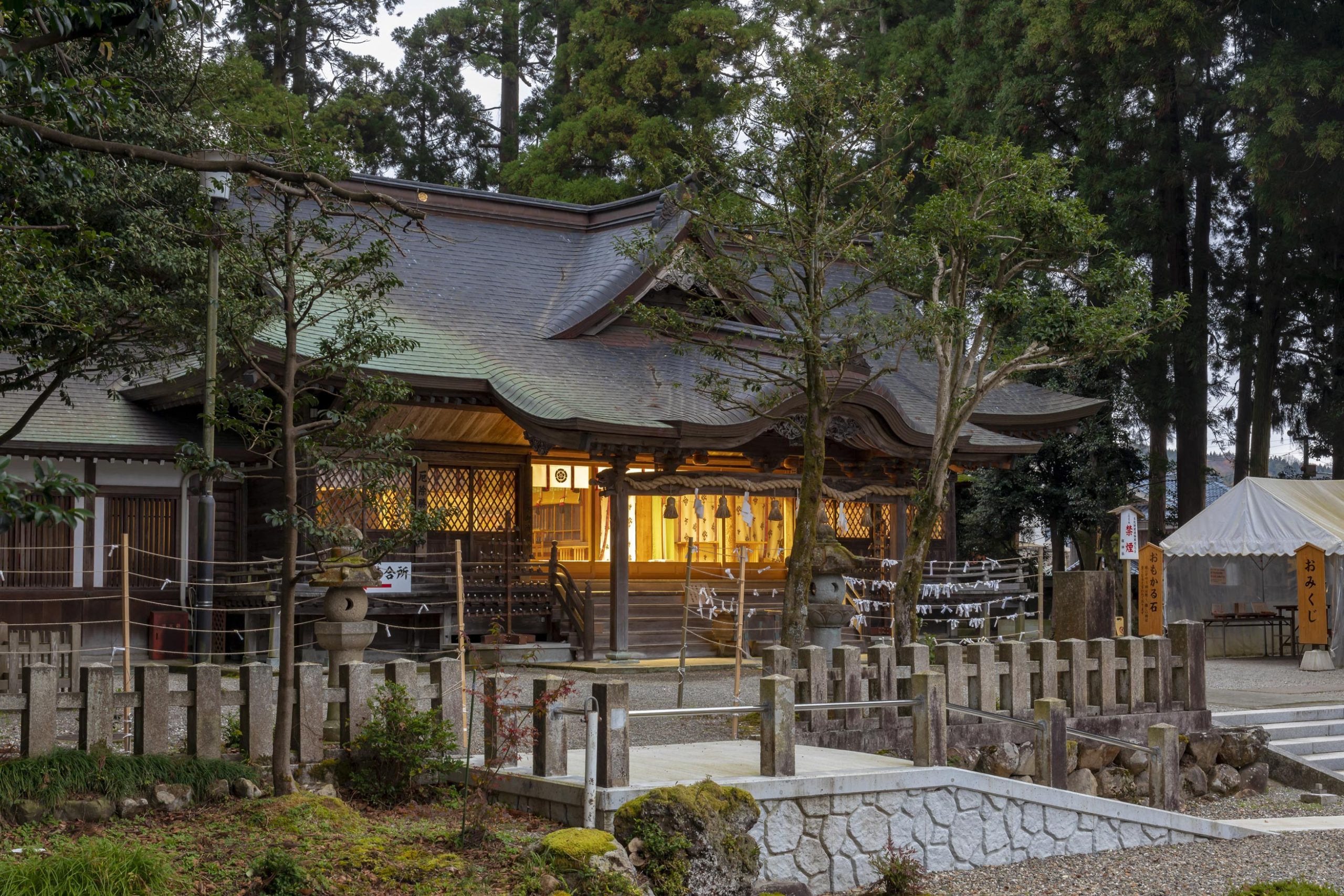
Tsurugi Shrine
The sword that is the sacred object of the Sword Shrine was made by Prince Inishikiirihiko-no-mikoto, son of Emperor Suinin, the 11th Emperor of Japan, and was given to Prince Oshikuma, son of Emperor Chuai, during the reign of Empress Jingu regent, After Oshikumao defeated and pacified the Koshi-no-kuni (Koshi Province), the god's spirit enshrined in this area was invited to the present location, and this sacred sword was enshrined as the spirit of the deceased.
Oda, Echizen-cho is the hometown of the ancestors of Nobunaga Oda, and the founder of the Oda clan served as a priest of the sword shrine from generation to generation. Therefore, even in turbulent times, Nobunaga Oda deeply revered the Sword Shrine as his clan deity.
The temple bell, said to be the third oldest in Japan, is a national treasure, and the main shrine is a designated prefectural cultural property. The shrine is visited by many worshippers from within and outside of the prefecture for its blessings for the fulfillment of great wishes.
50 minutes by car from the hotel
Or 35 minutes by bus (bound for Echizen Kaigan) from JR Takefu Station. -
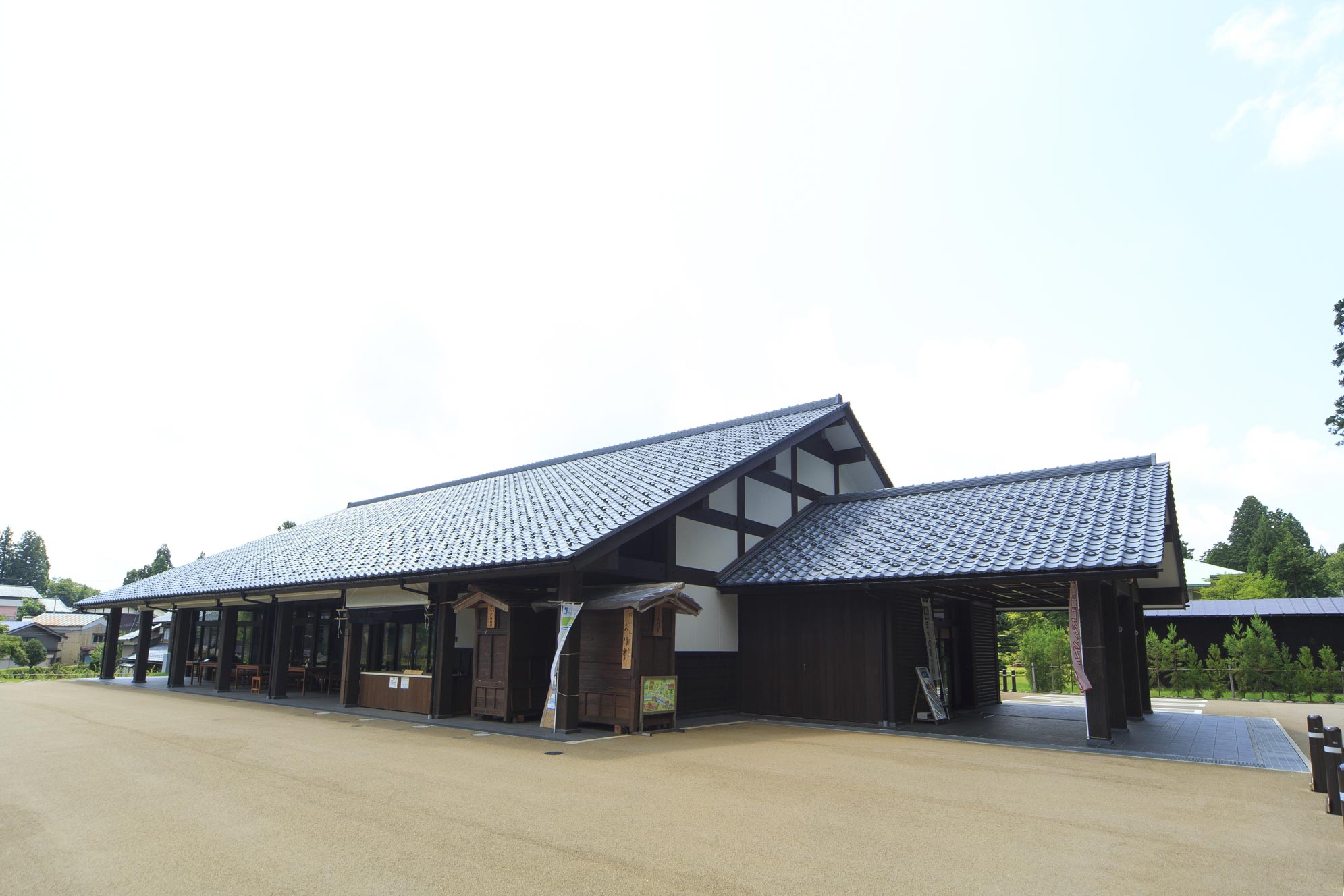
Hakusan Heisenji Temple
It is said that the temple was founded by Taicho Daishi in 717 as a base on the Echizen side of Mt. Hakusan (2,702 m above sea level), a sacred mountain that has been an object of worship since ancient times. In the late Heian period (794-1185), the temple developed as a branch temple of Enryaku-ji Temple on Hieizan of the Tendai sect. The temple's heyday was during the Warring States Period, and it seems to have been the largest religious force in Japan at that time. Excavations that began in 1989 revealed that the remains of the temple were still buried underground, and because the temple was one of the most extensive and well-preserved in Japan, the entire area within its former precincts was designated a National Historic Site.
Currently, the precincts of the shrine, centering on the vegetation slope leading to the main shrine and the worship hall, are covered with beautiful moss, as if a carpet of green had been laid over the entire area, and it is also called "Kokemiya" (moss palace).
Approximately 70 minutes by car from the hotel
Or
Take the Echizen Railway from JR Fukui Station to Katsuyama Station. 13 minutes by train on the Dynagon (in the direction of Hiraizumiji Temple). -
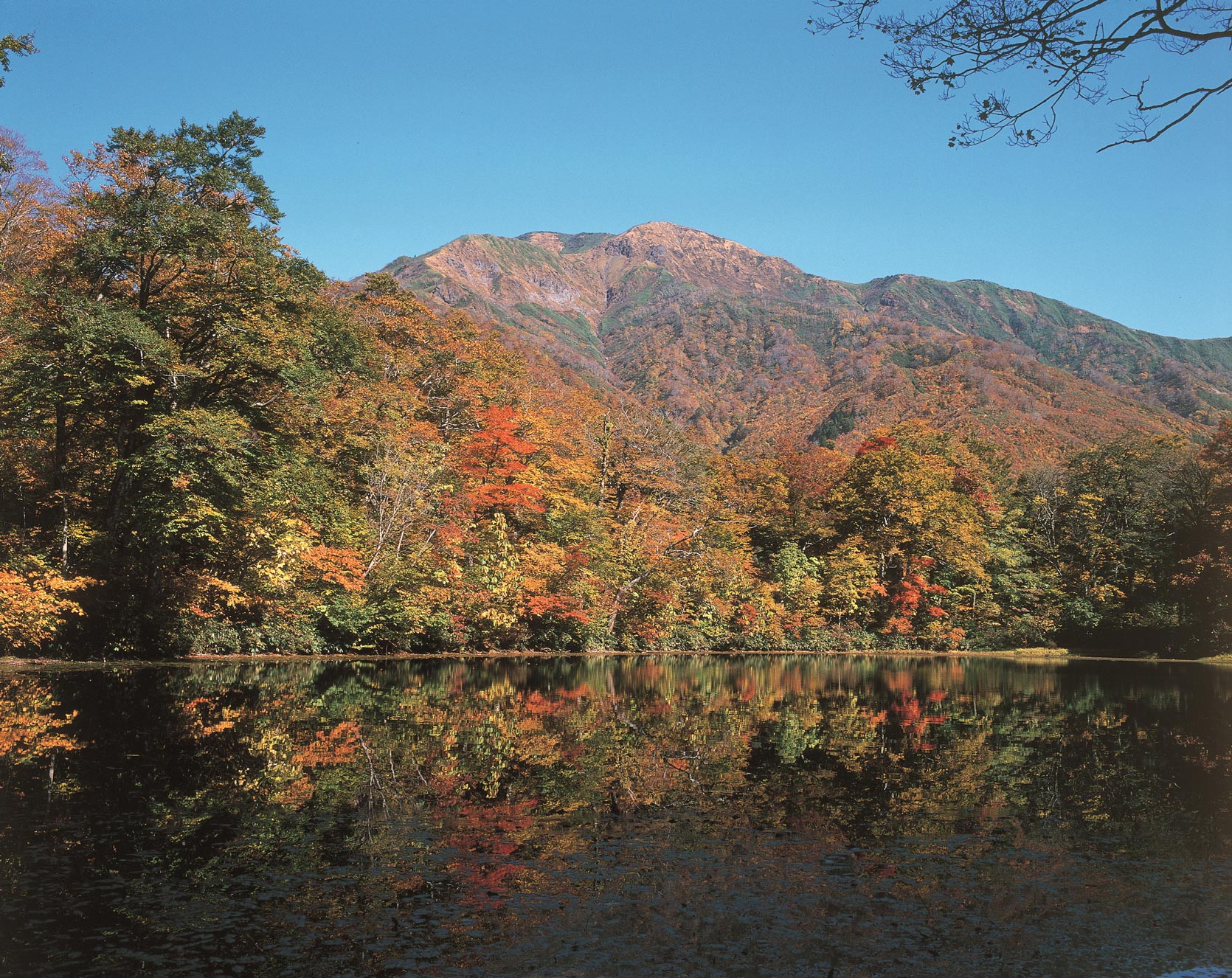
harvesting pond
Karikomi-ike Pond is located at the foot of Gankyoji Mountain, upstream from the Uchinami River in Ono City. Legend has it that a long time ago, Taicho Daishi parted and pruned a giant snake lurking in Hakusan Senbekiga-ike Pond to contain it. Surrounded by primeval forests of beech and mizunara oak, Karimogaike Pond, with a circumference of approximately 400 meters and a maximum depth of 4.5 meters, is a very beautiful pond that transfers "San-no-Mine," one of the Hakusan mountain range.
Although there are streams flowing into this pond, there is no place where water flows out of this pond. However, the water level of the pond is constant and it is very quiet and mysterious.
During the fall foliage season, the pond attracts many tourists from within and outside of the prefecture.
The walk is a bit strenuous, but when you get there and see the view, you will be glad you made the effort to climb up there.
Approximately 90 minutes by car from the hotel to the Kamikoike parking lot and approximately 60 minutes on foot.
*Mountains have large temperature differences between day and night, and the weather is changeable, so please be prepared in terms of clothing and physical condition.
Please check the road information carefully as there may be traffic restrictions. -
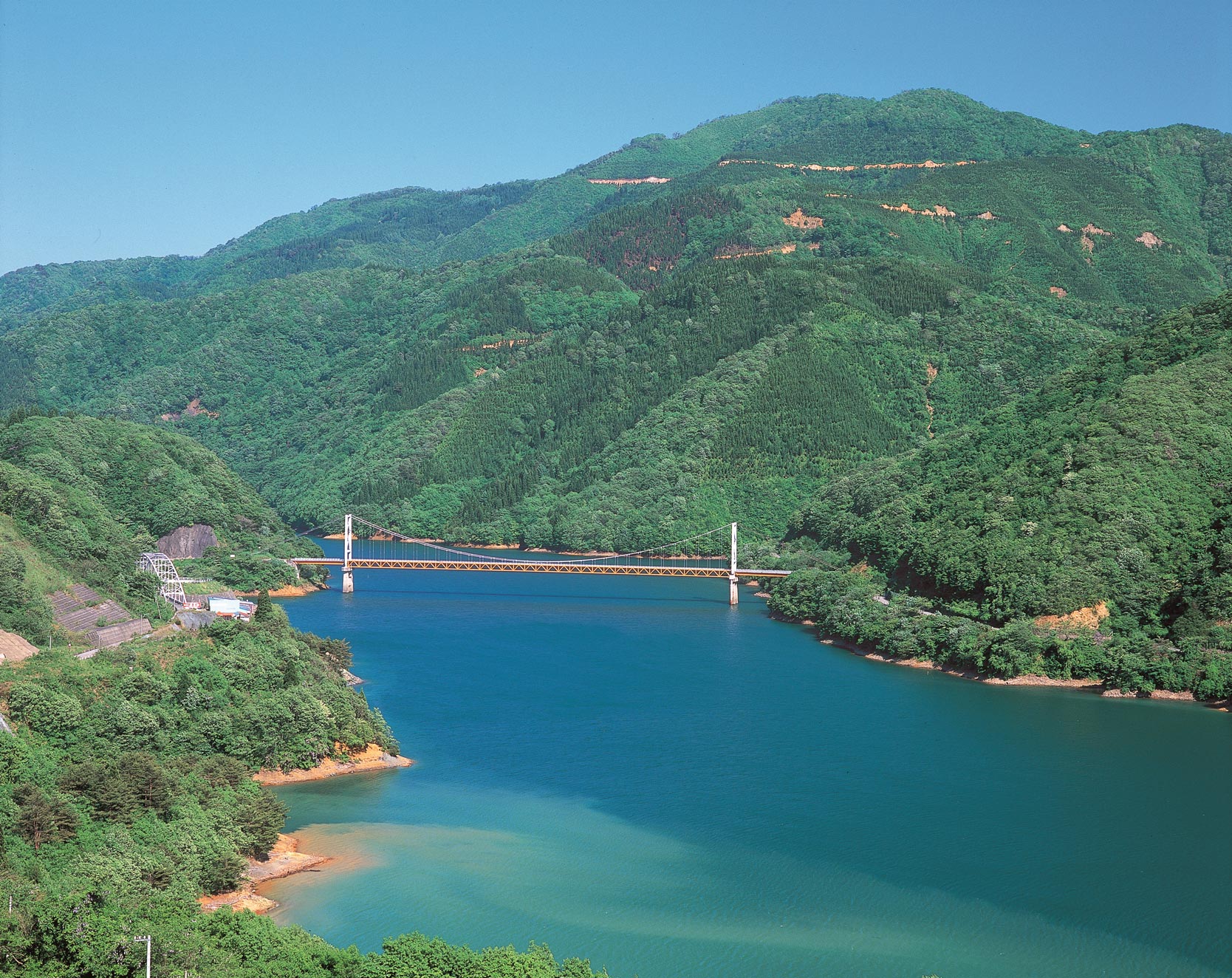
Lake Kuzuryu
Lake Kuzuryu is an artificial lake created when the Kuzuryu River was dammed by the Kuzuryu Dam (a multipurpose dam with a height of 128 m and a crest length of 355 m).
The name "dragon with nine heads" is used for the lake, dam, and river, but there are many theories as to its origin.
Lake Kuzuryu is a mountainous lake full of nature, and the green of the trees beautifully covers the surface of the lake in each of the four seasons. In autumn, the trees change color and the calm surface of the lake is tinted with yellow, red, and orange autumn colors. The large temperature difference between day and night makes the autumn colors stand out and make for a very beautiful sight.
The Hakokase Bridge over the lake is 266 meters long and is commonly called "Yume no Kakehashi. This bridge was built as a prototype for the Seto Bridge connecting Honshu and Shikoku.
Please enjoy the magnificent view of Lake Kuzuryu with its abundant water, the magnificent nature, and the Yume no Kakehashi.
Approximately 90 minutes by car from the hotel
Or 10 minutes by cab from JR Fukui Station to Kuzuryu-ko Station on the Echibihoku Line.
-
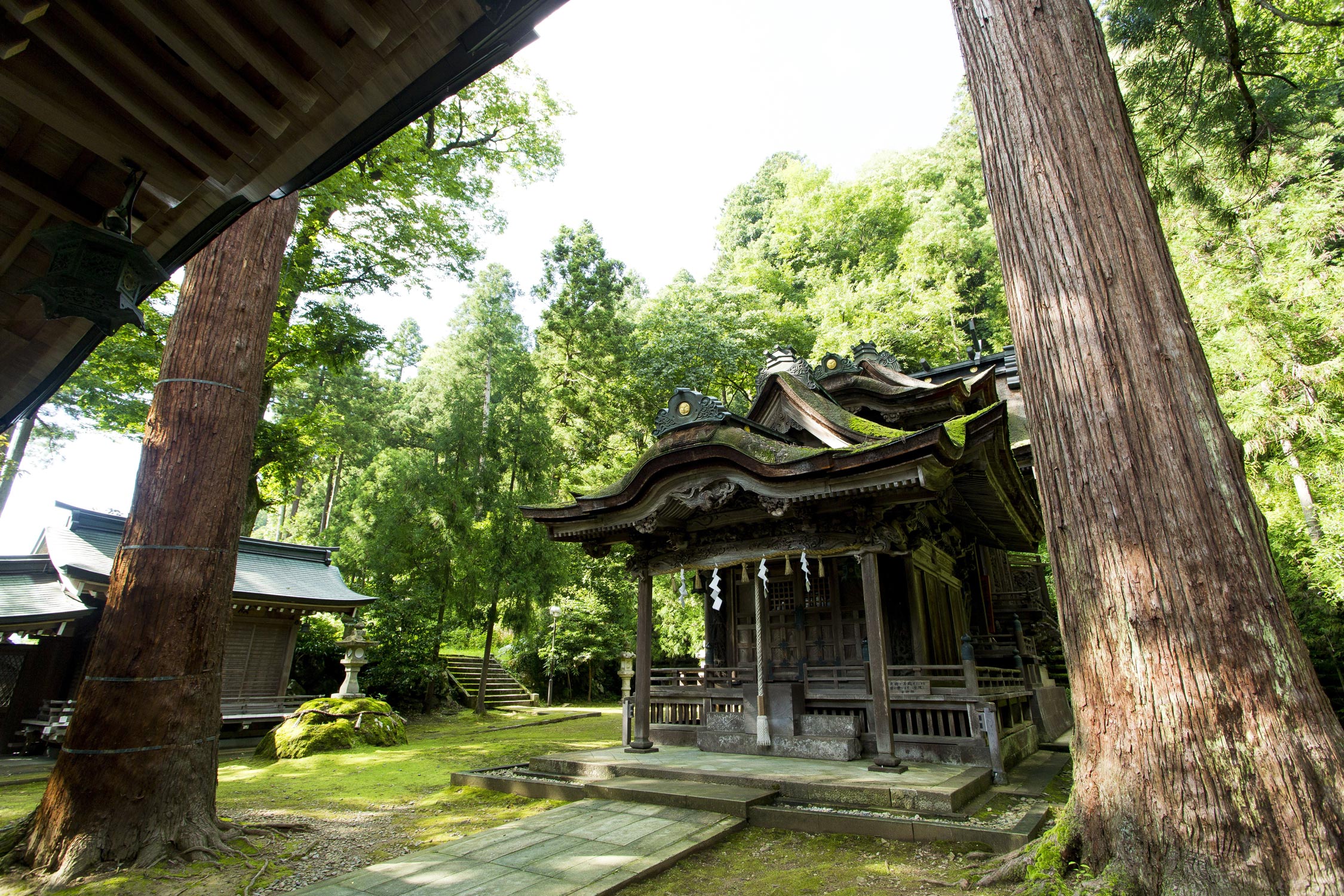
Okata Shrine, Otaki Shrine
It is the only shrine in Japan dedicated to the god of paper.
Okamoto Shrine is said to have been established about 1,500 years ago, when Emperor Tsugitai (the 26th Emperor) was still in Echizen Province, a princess appeared upstream from the Okamoto River and taught the villagers the art of paper making. She is mentioned in the Engishiki Shinmeicho, a 926 book of Shinto rituals.
Otaki Shrine is also said to have been originally built by Otomo no Muraji during the reign of Emperor Suiko, and in 719, Taicho Daishi, who visited the area, built the shrine to worship Kawakami-gozen as a guardian deity.
In 1923, the spirit of Kawakami-gozen was enshrined in the Paper Division of the Printing Bureau of the Ministry of Finance, and Okata Shrine became the general shrine of the paper industry in Japan, both in name and reality.
In this area, faith in the shrine is still strong, and the tradition of papermaking has been preserved, and the paper industry, centering on the production of Echizen washi, has flourished.
Approximately 40 minutes by car from the hotel
Or, from JR Takefu Station, take the Fukutetsu Bus to Nanketsu Line, get off at Washi no Sato, and walk about 10 minutes.
-
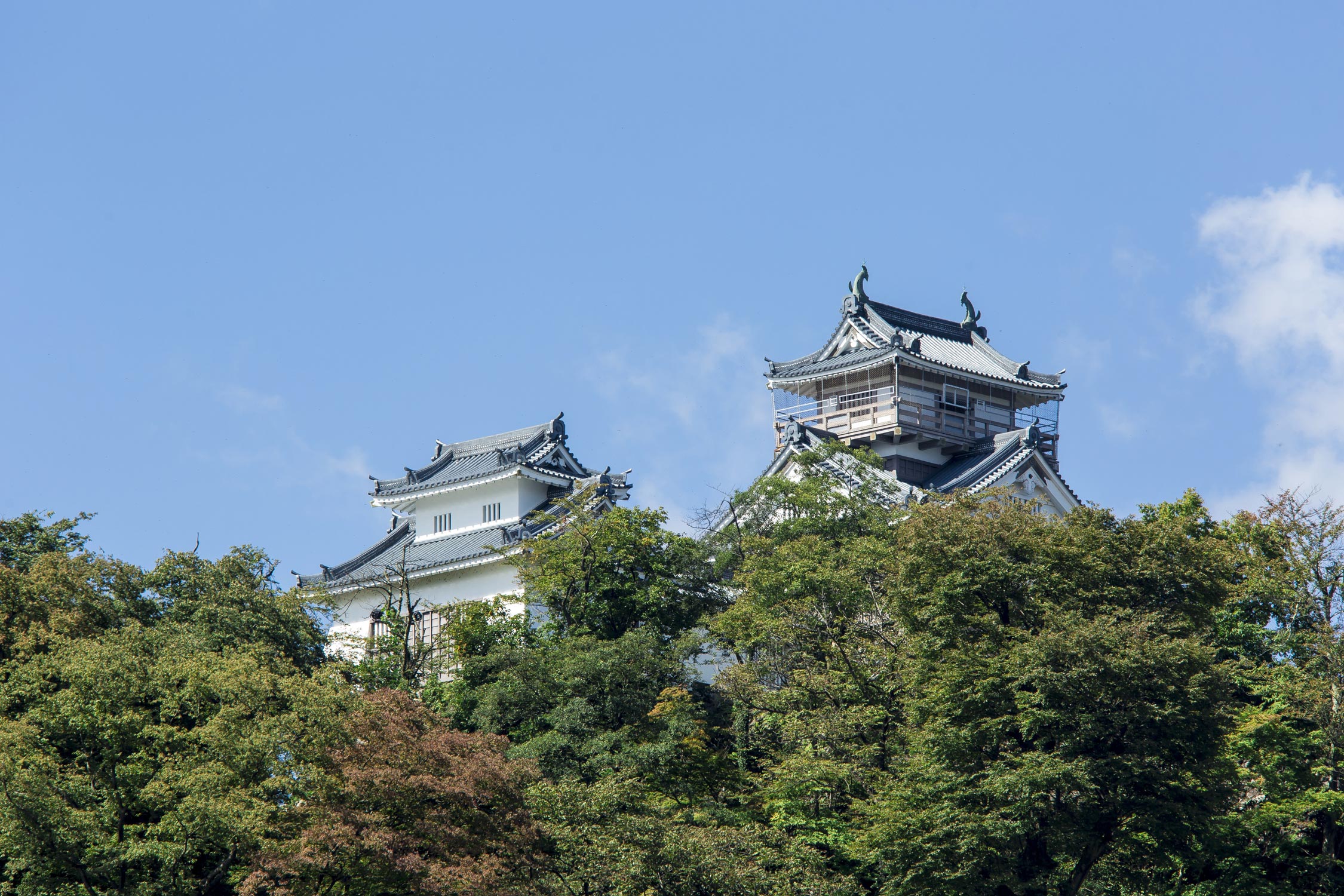
Echizen Ono Castle
Echizen Ono Castle is a flat mountain castle built in 1575 by Nagachika Kanamori, who was given two-thirds of Ono County by Nobunaga Oda as a reward for having ended the Ikkou Uprising. The castle was protected by outer and inner moats. The present castle was rebuilt in 1968, and inside the castle is a museum displaying the relics of successive lords of the castle.
Echizen-Ono Castle appears as a "castle in the sky" from October to the end of April, and when certain weather conditions are met, a sea of clouds appears and the fantastic Echizen-Ono Castle can be seen.
*To view Echizen-Ono Castle in the Sky, visitors must walk up the Inuyama trail located approximately 1 km from Echizen-Ono Castle. You will be climbing a steep mountain trail. Be well prepared when climbing in the dark at dawn or during the winter. Also, it may be crowded at photo spots.
Approximately 50 minutes by car from the hotel
Or take the Echizen-Ono Station on the Echibihoku Line from JR Fukui Station and get off at Echizen-Ono Station. 30 minutes on foot to the entrance of the castle. 15 minutes on foot from the entrance to Echizen-Ono Castle. -
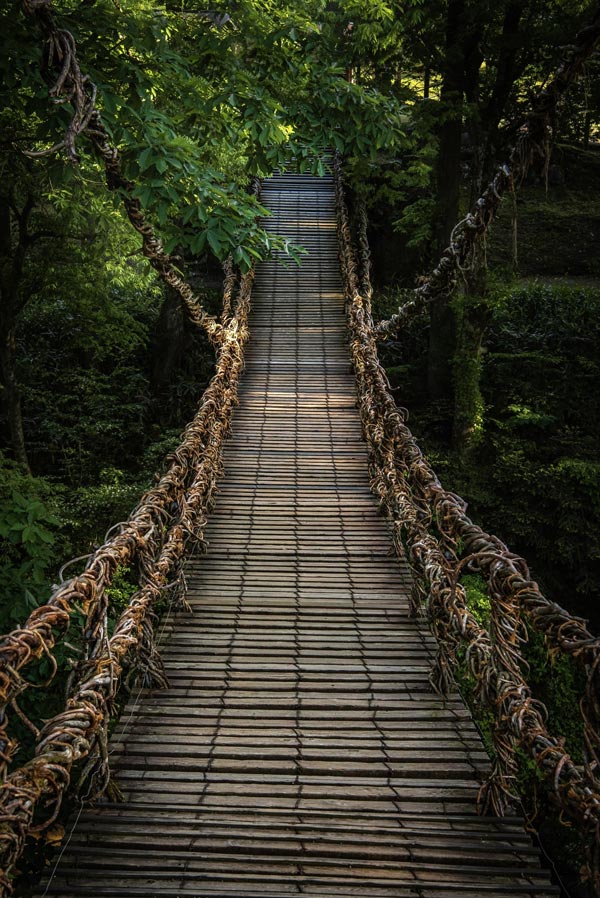
Kazura Bridge
The Kazura Bridge in Ikeda-cho is a suspension bridge over the Ashiba River Gorge. It is 44 meters long and 12 meters high. There are many Kazura bridges in Japan, but it is said that a suspension bridge made mainly of natural materials is rare in Japan. The trees growing on both sides of the bridge offer fresh greenery and autumnal foliage.
There is another reason why the Kazura Bridge in Ikeda-cho is rare in Japan. The gap between the treads is wide, and the bridge shakes a lot. The squeaking and squeaking sound that you hear as you walk along makes you feel the thrill of the suspension bridge even more.
Speaking of suspension bridges, there is the "suspension bridge effect. If two people cross a thrilling suspension bridge together, they may be able to find eternal happiness ♡.
Perhaps because of this effect, the Kazura Bridge in Ikeda-cho has become famous in recent years as a power spot for romance.
Ikeda Town, where the Kazura Bridge is located, is also full of other fun spots! From children to adults, Ikeda-cho can be enjoyed all day long. There is also a place nearby where you can eat Echizen Oroshi Soba (buckwheat noodles with grated radish).
Approximately 45 minutes by car from the hotel
Or, get off at JR Takefu Station, transfer to Fukutetsu Bus, and take the Ikeda Line for about 60 minutes. -
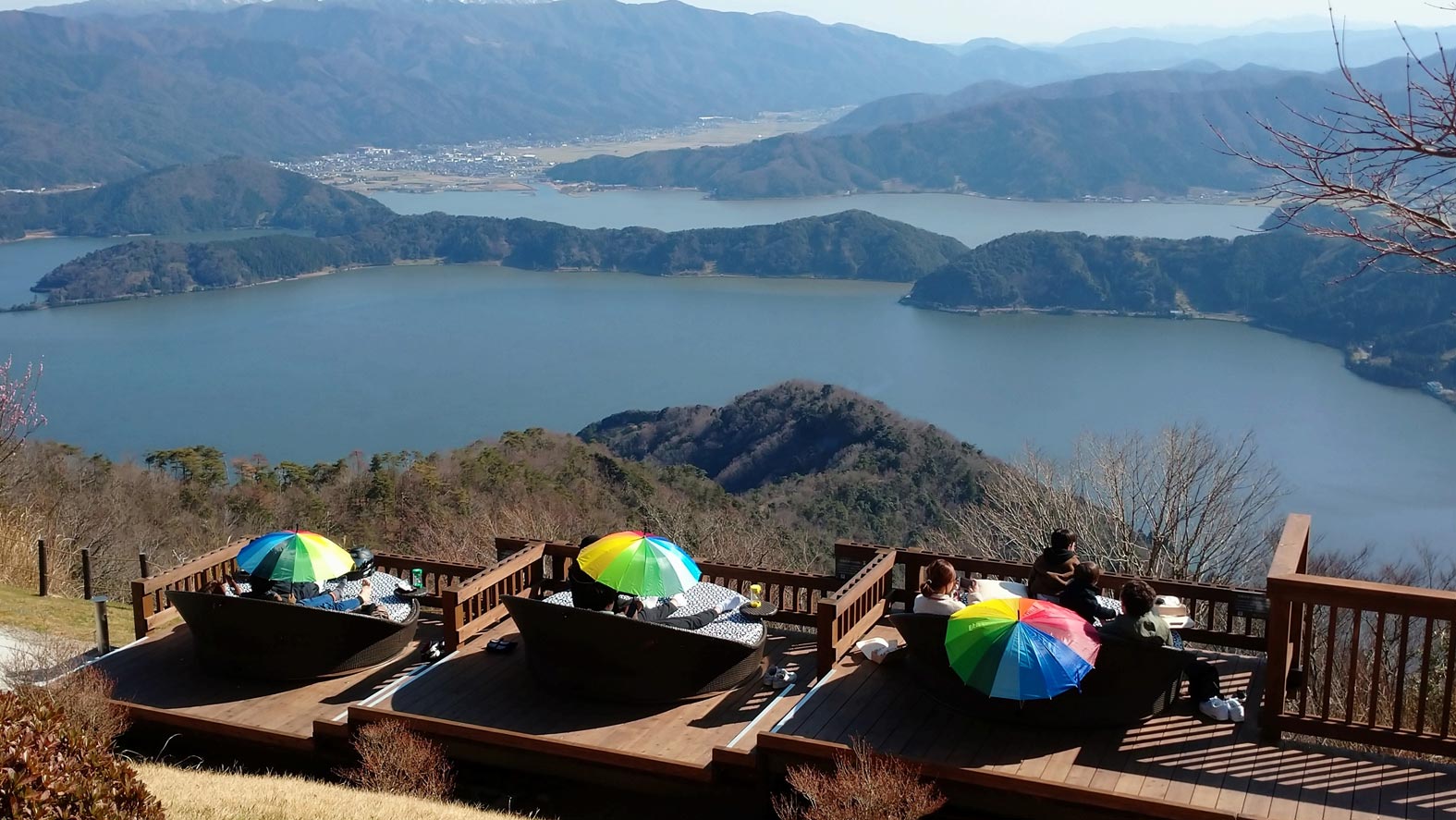
the Five Lakes of Mikata
Mikata Goko is the collective name for five lakes located in the Reinan region of Fukui Prefecture, which were registered as a Ramsar Convention-designated wetland in 2005, and in 2015 were recognized as a Japanese Heritage Site.
All five lakes, Mikata Lake, Lake Suigetsu, Lake Suga, Lake Kugako, and Lake Hyuga, are connected. However, each of the five lakes has a different depth and salinity, and the colors they produce are slightly different and very mysterious.
On the bottom of Lake Suigetsu, stripes called nenkou, or annual stripes, have formed over a period of 70,000 years. Nenkou is a distinctive stripe pattern of lake sediment that is formed by layers of sediment deposited over a long period of time, with one layer formed per year. In 2013, the lake was recognized as the world's "standard measure of dating.
The Rainbow Line, which overlooks the Mikatagoko Lakes, has several terraces, and the summit park is especially recommended; in 2019, the spectacular view of the mysterious Mikatagoko Lakes from the "footbath in the sky" in the summit park was recognized with the "Cool Japan Award 2019".
Approximately 110 minutes by car from the hotel
Or 15 minutes by cab from Mihama Station on the JR Kohama Line

-
Echizen Oroshi Soba
Echizen Oroshi Soba is characterized by its unique dipping sauce with a generous amount of grated daikon radish and black, firm noodles. The sweetness of the savory noodles and the spiciness of grated daikon (Japanese radish) create a unique taste that will captivate you once you try it. The name "Echizen Soba" comes from the fact that when the Emperor Showa visited Hokuriku in 1947, he tasted soba in Takefu (now Echizen City) and later called it "that Echizen Soba.
-
bowl of rice topped with sliced raw pork and cutlet
Sauce katsudon is famous on TV and in magazines, and can only be tasted in Fukui. In Fukui, the word "katsudon" refers to a bowl of pork cutlet served with sauce, while a bowl of pork cutlet served with egg is called "tamago katsudon" to distinguish it. The secret sauce and crispy fried pork cutlets of perfect thickness are exquisite.
-
Volga Rice in Echizen City
Borga Rice, a local delicacy in Echizen City, Fukui Prefecture, is a specialty consisting of omelet rice topped with a cutlet and then topped with a special sauce. In fact, the origin of the name and the restaurant where it originated are not known. However, it is a familiar taste loved by the locals.
-
fried tofu from Fukui
In Fukui Prefecture, the word "abura-age" generally refers to thick fried bean curd. In Fukui, thick fried bean curd is often used in dishes such as miso soup and simmered dishes. Fukui has a strong Jodo Shinshu faith, and fried bean curd dishes were always served for lunch at the "Hoonko" event held by the believers in autumn. Today, there are many restaurants in Fukui Prefecture where fried bean curd can be enjoyed, and among them, Taniguchiya in Maruokamachi, Sakai City, attracts many customers from inside and outside the prefecture.
-
Seafood from the Sea of Japan
Fukui Prefecture is blessed with abundant seafood. Fresh seafood can be enjoyed in all four seasons. In Fukui Prefecture, there are many restaurants that offer funazari, an assortment of sashimi from various freshly caught fish. Be sure to try them when you come to Fukui.
-
northern pink prawn
The clear, bright red amaebi is indescribably delicious with a sweet taste that spreads in the mouth. It is one of the representative winter delicacies of Fukui. Amaebi caught offshore are landed at the market with their freshness and flavor intact.
-
Koshihikari (variety of rice)
This rice was developed at the Fukui Prefectural Agricultural Experiment Station in Showa 31 through tremendous effort and over a decade of work, and is harvested every year in early September. The nationally renowned “Koshihikari” actually originated in Fukui Prefecture. It is the most widely cultivated rice variety in Japan and has become synonymous with delicious rice.
Hotel Fujita FukuiThe rice served at breakfast at “Camellia” on the 5th floor is also Koshihikari grown in Ōno City, Fukui Prefecture. -
fish pickled in rice-bran pas
In the old days, heshiko was valued as a preserved food during the winter when fishing was not possible. It is made by marinating bluefish such as mackerel and sardines in nuka for one to two years and then aging them. It is a healthy food rich in amino acids, and is best served with ochazuke (rice with green tea), onigiri (rice balls), or as a snack with alcohol.
-
bowl of rice topped with sliced dried young anchovies (esp. sardines)
The Echizen crab fishing season begins every year on November 7 and continues until late March of the following year. Among these, the season for female “Seiko” crabs ends at the end of December, so if you want to savor Seiko crab, you’ll have to do so before the year ends. The recommended way to enjoy Seiko crab is in a Seiko crab rice bowl. Its distinctive flavor comes from the rich internal and external roe. It’s such a luxurious dish that you’ll never forget it once you’ve tried it.
Hotel Fujita FukuiYou can, of course, enjoy it at “Tachibana,” the Japanese restaurant on the 17th floor. -
Echizen crab (Birgus hypoleucos)
"Echizen crab" is the king of Fukui’s winter delicacies. The male is called "Zuwai," and the female is called "Seiko." These crabs inhabit offshore waters, where fishermen catch them using bottom trawl nets. They bring the crabs back to port fresh—without freezing them—where they are immediately auctioned off and shipped. The proximity of the fishing grounds is one of the reasons you can enjoy such fresh and delicious Echizen crab.
Hotel Fujita FukuiAt “Tachibana,” the Japanese restaurant on the 17th floor, you can relax and enjoy crab while experiencing the hotel’s attentive service. -
Local Sake of Fukui
Fukui Prefecture has good water, good rice, and experienced brewers. Fukui is famous for its large number of breweries. While a luxurious experience at a brewery or store in Fukui Prefecture is a good choice, we also recommend that you buy a bottle as a souvenir and enjoy it at home.
-
soft sweet bean jelly or paste
Mizuyokan is often thought of as a summer sweet, but in Fukui, it is customary to eat mizuyokan cooled in a warm room with a kotatsu (a table over a kotatsu) during the cold winter months. Fukui's mizuyokan is softer than ordinary kneaded yokan and has so much water that it shakes when shaken. It is surprisingly healthy.
-
Habutae mochi
Echizen Fukui has long flourished as a town of silk fabrics. Among these, "Habutae," a particularly lustrous type of silk, has been loved as a luxury item. Habutae mochi (rice cake made of feathers) is a confectionary that captures the elegance of this fabric. Habutae mochi is the pride of Fukui Prefecture and is characterized by its elegant sweetness and fine texture.
-
pickled sea bream
A specialty of Wakasa, it is made by slicing lenkodai from the Sea of Japan into three pieces, seasoning them with salt and vinegar, and pickling them in a barrel. The name comes from the antiseptic properties of the bamboo leaves used when the fish is packed in the barrels. It is also a popular souvenir.
-
wakasa puffer (Takifugu wakasa)
Along with Echizen crab, it is one of the most popular winter delicacies. In Fukui, fugu sashimi is called "tessa," and its fresh taste can be enjoyed. Fugu nabe (blowfish hot pot), karaage (deep-fried blowfish), yaki fugu (grilled blowfish), fin sake (sake made from the fin), and many other cooking methods are available to the delight of visitors to the area.
-
wakasa goji (species of fish, Parupeneus multifasciatus)
The Japanese name for Wakasa-guji is akamadai (red amadai). Amadai derives its name from the sweet taste of its meat. Not all amadai caught in Wakasa Bay are called Wakasa-guji, but only large amadai carefully selected from those caught in the Haenawa fishery that are fresh and beautiful in shape are called Wakasa-guji.
-
wakasa kudzu manjuu (steamed bun) with a filling of red bean paste
Wakasa kuzu is one of the "three major kuzus" in Japan, and Wakasa kuzu manju is a typical confectionery of the Obama region that uses kuzu and makes full use of rich water and natural ingredients. When cooled in water from a well dug out of the ground, the natural flavor of the manju is enhanced and the taste becomes even more delicious.
-
wakasa eel (Anguilla japonica)
Eels from Lake Mikata are also known as kuchiboso ao eel, and are characterized by a pointed mouth and rounded buttocks. They have a very good reputation for their taste. There are four eel restaurants in Wakasa Town, serving Wakasa eel that preserve the taste and tradition.
-
Designated by the Minister of Economy, Trade and Industry] Echizen lacquerware
Echizen lacquerware boasts a history of approximately 1,500 years, with origins dating back to the 6th century. When the 26th Emperor Tsugitai ordered a lacquer craftsman in Kawawada to repaint his childhood crown, he was presented with hand-lacquered, black-lacquered tableware. It is said that Emperor Tsugitai was deeply impressed by the brilliant luster and brilliance of the lacquerware, and encouraged the Emperor to use it.
In recent years, Echizen lacquerware has been used in the production of Echizen-nuri floats and in school lunches.
In the Kawada district of Sabae City, the main production center of Echizen lacquerware, there is the Urushi-no-Sato Kaikan, which introduces the history and techniques of Echizen lacquerware and offers workshops and demonstrations of lacquerware production. -
Designated by the Minister of Economy, Trade and Industry] Echizen Washi
It is said that about 1,500 years ago, a beautiful princess appeared and taught the art of papermaking. In the Nara period (710-794), it began to be used to make sutra paper, which was necessary for Buddhism, and was very useful. During the Edo period (1603-1867), the technique and production of paper improved, and it was used for official documents of the shoguns called "Hosho" and official documents of court nobles called "Danshi". The watermarking technique called "Kuro sukashi," which was used on Japan's first paper for banknotes issued in the first year of Meiji (1868) and is still used today, was originally a technique handed down from Echizen Washi.
At Echizen Washi no Sato, visitors can observe and try their hand at papermaking. You can take home the washi you make. -
Designated by the Minister of Economy, Trade and Industry] Echizen Pottery
Echizen-yaki is counted among Japan’s Six Ancient Kilns. Its history dates back to around the late Heian period, and production focused primarily on everyday utensils such as water jars (for water and grain) and mortars.
Carried by Kitamae ships from the Echizen Coast, Hokkaidoit spread as far as Shimane, developing into the largest pottery-producing region in the Hokuriku area. Echizen-yaki, with its rustic beauty and the warm, earthy character of the clay, is still cherished by many people today.
At the Echizen Pottery Village, you can fully experience the charm of Echizen-yaki and the Echizen region. -
Designated by the Minister of Economy, Trade and Industry] Echizen Uchihamono
It is said that the craft began in 1337 when Chiyotsuru Kuniyasu, a renowned swordsmith from Kyoto, visited present-day Echizen City and made sickles for the farmers in the suburbs. During the Edo period (1603-1867), the city expanded throughout Japan due to the protection policy of the Fukui domain, etc. In 1979, the city became the first cutlery production area in Japan to be designated as a traditional craft in recognition of its history and skills.
Takefu Knife Village is the only place in the country where visitors can tour a shared workshop. There is also a hands-on workshop where visitors can try their hand at making authentic kitchen knives. -
Designated by the Minister of Economy, Trade and Industry] Echizen chests
Echizen chests began around the late Edo period. However, it is believed that the Echizen shimono technique began in the 8th century. Echizen tansu are characterized by their stately construction, in which zelkova and other woods are worked using a unique shimono technique, richly decorated with metal fittings and lacquered. Echizen tansu are deeply connected with other traditional crafts of Fukui Prefecture, as they are made using the hozozai technique, which does not use nails, Echizen lacquerware techniques for the surface, and Echizen Uchihamono techniques for the decorative metal fittings. Today, Echizen chests are used more as furnishings than for weddings, but they continue to inherit their unique texture and quality.
Visitors to Echizen Tansu-cho Street can experience the history and tradition of tansu. -
Designated by the Minister of Economy, Trade and Industry] Wakasa-nuri and Wakasa-nuri chopsticks
Wakasa-nuri is a traditional craft produced in Obama City, Fukui Prefecture. Among Wakasa-nuri products, lacquered chopsticks in particular account for 80% of the national market share, and many celebrities have been presented with chopsticks made from Wakasa-nuri. Among them is U.S. President Barack Obama.
It is said that the Wakasa lacquerware was first made by Sanjuro Matsuura in the early Edo period (1603-1867), who copied a lacquer tray that a wealthy man in Obama had obtained from abroad. The process takes several months.
Visitors to WAKASA, the chopstick museum, can experience the traditional technique and try their hand at sharpening. You can also make your own original chopsticks. -
Designated by the Minister of Economy, Trade and Industry] Wakasa agate work
It is said to have started in the Nara period (710-794), but declined for a time.
During the Kyoho period in the Edo period (1603-1867), Kihei Takayama began making agate balls based on the techniques he learned while working for an optician in Naniwa, which led to the revival of the craft. In the Meiji period (1868-1912), thanks to the attempts of Heisuke Nakagawa, a craftsman of agate work, animals such as carp and chickens, as well as carvings, were produced as we know them today. The clear, delicate luster and meticulous workmanship of these traditional crafts are worthy of being called top quality products.
At the Wakasa-Obama Food Culture Museum, visitors can try their hand at polishing Wakasa agate.
-
Echibihoku Line (Kuzuryu Line)
It is a 52.5 km railroad line operated by JR West Japan, running from Echizen Hanado Station in Fukui City to Kuzuryu-ko Station in Ono City.
It is one of the means of transportation to "Yui no Hometown Echizen Ono," and at the same time, it is an important railroad line that is indispensable to the residents during the winter season.
It is a railroad line full of emotion, where you can enjoy a relaxing and leisurely ride. -
Echizen Railway
The Katsuyama-Eiheiji Line (27.8 km, 23 stations) and the Mikuni Ashihara Line (25.2 km, 21 stations), totaling 53.0 km, start at the east exit of JR Fukui Station.
Special tickets, such as a combination ticket with admission to the Fukui Prefectural Dinosaur Museum and a one-day free ticket, are also available.
The train's distinctive feature is that it runs through the tranquil countryside. Enjoy Fukui by riding the Echizen Railway, whose cabin attendants' activities were made into a movie. -
Fukui Railway Trains and Buses
The railroad connects Fukui City and Echizen City, and since there are only a few trains in Japan that run on the street, railroad fans from all over Japan enjoy taking pictures and riding the trains.
Tickets that include a coffee at the Otemachi Café on the first floor of the hotel and a train ticket are also very popular! Recommended for a relaxing train trip. -
Community bus "Smile
The Smile Bus is based on the concept of "residence (local community) and smile (smile).
There is no starting or ending point, and the fare is 100 yen no matter how far you ride!
There are four routes within Fukui City, and the bus circulates around the city in about 30 minutes. -
Keifuku Bus
Keifuku Bus operates mainly in the Reinan region of Fukui Prefecture.
The buses are very convenient for sightseeing as well as for commuting to and from work and school for residents of the prefecture.
Buses run not only to the Ichijodani Asakura Clan Ruins, Tojinbo, Eiheiji Temple, Maruoka Castle, and Ski Jam Katsuyama, but also to and from Tokyo, Nagoya, Osaka, and Kyoto on express buses.
A bus connecting to Komatsu Airport in Ishikawa Prefecture also operates, making it easy to travel by air. -
JR West (Odekake Net)
For JR service status and reservations within Fukui Prefecture, please visit ⇩.
https://www.jr-odekake.net/ -
Fukui Machinaka Sightseeing Tour Bus
A sightseeing bus that circles around the center of Fukui City.
Tourist attractions in the city center are easily accessible by bus.
Why don't you tour around the historical city?
The buses depart from JR Fukui Station every 35 minutes.
This is the perfect way to get around central Fukui City, including Mount Ashiba, Atagozaka, and the Museum of Local History.
-
Wacky Docky Doki Doki Katsuyama Dinosaur Forest
Katsuyama City in Fukui Prefecture is one of Japan's leading dinosaur cities. The number of dinosaur fossils excavated is the highest in Japan! Six of the nine new species of dinosaurs discovered in Japan have been found in Katsuyama City. Amazing! The new species of dinosaurs include either "Fukui" or "Katsuyama.
Visitors can enjoy the experience of fossil excavation at the Katsuyama Dinosaur Forest, using stones and rocks brought from the actual fossil excavation site in that Katsuyama City.
In the Doki Doki Dinosaur Excavation Land, visitors can try their hand at fossil excavation by breaking rocks and stones that are about 120 million years old! When you find one, you can take it home with you. However, if you find enough fossils to be used as research material, you will provide them to the Dinosaur Museum. Just touching a 120-million-year-old stone is a romantic experience.
Approximately 60 minutes by car from the hotel
Or get off at Katsuyama Station on the Echizen Railway Katsuyama Eiheiji Line
15 minutes by community bus -
Making and Eating Soba Noodles Soba Making Experience
Fukui is famous for its "soba" (buckwheat noodles). There are countless soba restaurants in Fukui Prefecture. Fukui's soba is "Echizen oroshi soba," which is served in a broth with grated radish and topped with plenty of bonito flakes and green onions. It is very simple, but the soba noodles are so thirst-quenching and the spicy taste of the daikon radish is so refreshing that you can have as many bowls as you like.
It is said that the name "Echizen Oroshi Soba" came from the Emperor Showa's comment about the soba he had when he visited Fukui Prefecture in 1947: "That Echizen Oroshi Soba was delicious.
There are many soba noodle shops, but there are also many places in Fukui Prefecture where you can experience soba noodle making. In Imajo, where buckwheat noodles with a distinctive savory aroma are harvested, there is a soba dojo. You can experience authentic buckwheat noodle making using genuine buckwheat flour ground on a stone mortar, natural yams, and delicious spring water.
The taste of soba made by yourself is exceptional! Please try it for yourself.
60 minutes by car from the hotel
Or, from JR Imajo Station, take the town bus bound for Hirono or Magoya, and get off at Daimon Bus Stop. 10 minutes walk. -
See, make, and enjoy Fukui Prefectural Ceramic Museum
Echizen Pottery is one of the six oldest kilns in Japan. Starting around 850 years ago, around the end of the Heian Period, the hard and durable Echizen Pottery developed into the largest kiln leaf in the Hokuriku Region and the largest on the Sea of Japan side.
The first kiln was built in Kosohara, Echizen Town, where the Echizen Pottery Village is located today. At Echizen Pottery Village, visitors can fully enjoy Echizen pottery. At the pottery pavilion, visitors can try their hand at hand-hineri. Using Echizen clay, visitors can create their own original Echizen Pottery with their own ideas. There is also a "Painting Experience Course" where you can paint pictures and characters on unglazed vessels.
Of course, you can also purchase Echizen-yaki at the pottery museum and enjoy matcha (powdered green tea) with Echizen-yaki tea bowls.
By the way, you all know all of the six oldest kilns in Japan, right?
About 50 minutes by car from the hotel
Or take the Fukutetsu Bus from JR Takefu Station and get off at the Ceramic Village Exit. -
Learn and play! Fukui Children's Science Museum Angel Land Fukui
The Fukui Children's Science Museum, where astronaut Mamoru Mohri serves as honorary director, is nicknamed "Angel Land Fukui" and is well known by local children.
The museum has several areas. The play area offers workshops for children, science shows, and dinosaur-shaped play equipment for children to play with. In the Space Theater, visitors can enjoy powerful dome images and an optical planetarium on a 23-meter-diameter dome screen, one of the largest in Hokuriku. In the exhibition area, there are many wonders to tickle your curiosity!
In addition, outdoors, visitors can play freely on the spacious lawn area with athletic equipment and slides for toddlers. You could spend a whole day playing here and still not have enough to do.
Approximately 30 minutes by car from the hotel
Or a 15-minute walk from Taromaru Angel Land Station on the Echizen Railway Mikuni-Ashihara Line. -
Longest in Japan! Mega Zipline! Tree Pick Adventure Ikeda
Located in Ikeda-cho, Fukui Prefecture, where about 90% of the land is forest, this facility allows visitors to enjoy nature to the fullest. The Mega Zipline, said to be the longest in Japan, starts at an altitude of 339 meters! The outward journey is 480 meters and the return 510 meters, crossing two valleys, while looking down at the tops of the trees and the flowing river from the sky.
In addition to the Mega Zipline, there are many other programs to play with nature, including a forest jungle gym and a 2.1 km-long river adventure boat.
There is a café inside the facility where you can have a meal. You can enjoy Ikeda burgers made with ingredients from Ikeda Town, rice balls made from Koshihikari rice produced in Ikeda Town, and more.
Approximately 50 minutes by car from the hotel.
*There is no bus service, so please use your own car, cab, or rental car. -
Echizen Matsushima Aquarium is a hands-on, experiential type of aquarium!
Echizen Matsushima Aquarium is a fun and educational hands-on aquarium. Visitors can watch dolphin shows and penguin walks up close, touch sharks, a giant octopus, and doctor fish, and feed sea turtles. The coral reef tank, with its glass surface, is a bit thrilling. It is like walking on the sea.
Special programs are also available! Guided tours by aquarium keepers give visitors a peek behind the scenes of the aquarium, which they would not normally be able to see. The "All Night Overnight Aquarium" is a premium program that allows visitors to enjoy the aquarium at night. â™" Isnâ™" t it fascinating to be able to sleep at the aquarium?
Approximately 50 minutes by car from the hotel
Or, take the Echizen Railway Mikuni Ashihara Line and get off at Awara Yunomachi Station. 15 minutes by bus transfer. -
Takefu Knife Village, where the sound of steel being forged and beaten resounds
Echizen Uchihamono is one of Fukui Prefecture's traditional crafts designated by the Minister of Economy, Trade and Industry. Echizen Uchihamono was the first cutlery production area in Japan to be designated as a traditional craft. Even today, the ancient Japanese fire-making forging technique and hand sharpening are still preserved, and craftsmen make each blade one by one with great care.
Takefu Knife Village in Echizen City is a joint factory for young artisans of hammered knives. The exterior is very unique, and upon entering, visitors are greeted by a 1.8-meter-long rapeseed knife with a blade. You can observe traditional forging techniques in the workshop.
At Takefu Knife Village, visitors can make everything from paper knives to kitchen knives and authentic knives. The workshop, where visitors can experience most of the processes from hizukuri forging, in which materials are reddened and forged, to the finishing touches, is very popular. Some of the classes take two days to complete, so you can tell how authentic the experience is.
Approximately 45 minutes by car from the hotel
Or, take the Fukutetsu Bus from JR Takefu Station to Iriya Line, get off at Ajimano Jinja-mae and walk 10 minutes. -
The world's only beautiful my chopsticks WAKASA, the home of chopsticks
There are more and more opportunities to eat rice at home. It is precisely at times like this that it is good to try to taste the food with chopsticks you have made yourself, don't you think?
Wakasa-nuri chopsticks boast more than 80% of the national share of lacquered chopsticks in Japan. Wakasa-nuri is characterized by the beautiful undersea patterns created by embedding seashells and eggshells into the lacquer. This technique is a style unique to Wakasa-nuri. The beautiful seafloor pattern is created by carefully grinding and polishing the layers of lacquer that have been applied more than a dozen times.
At the Chopsticks Home Museum WAKASA, you can try your hand at sharpening. Try making your own one-of-a-kind chopsticks.
About 10 minutes by car from Obama IC on Maizuru-Wakasa Expressway.
Or about 10 minutes by cab from JR Obama Station.